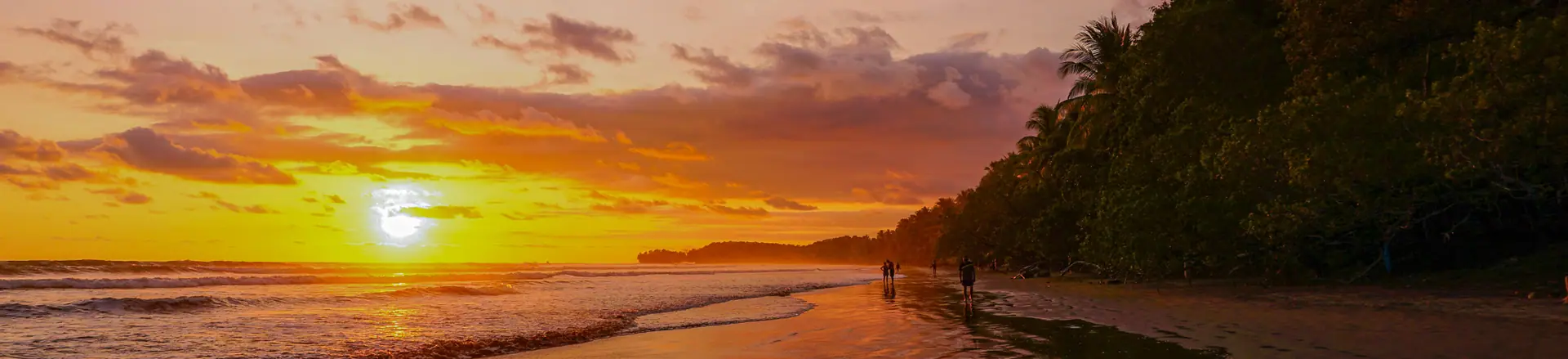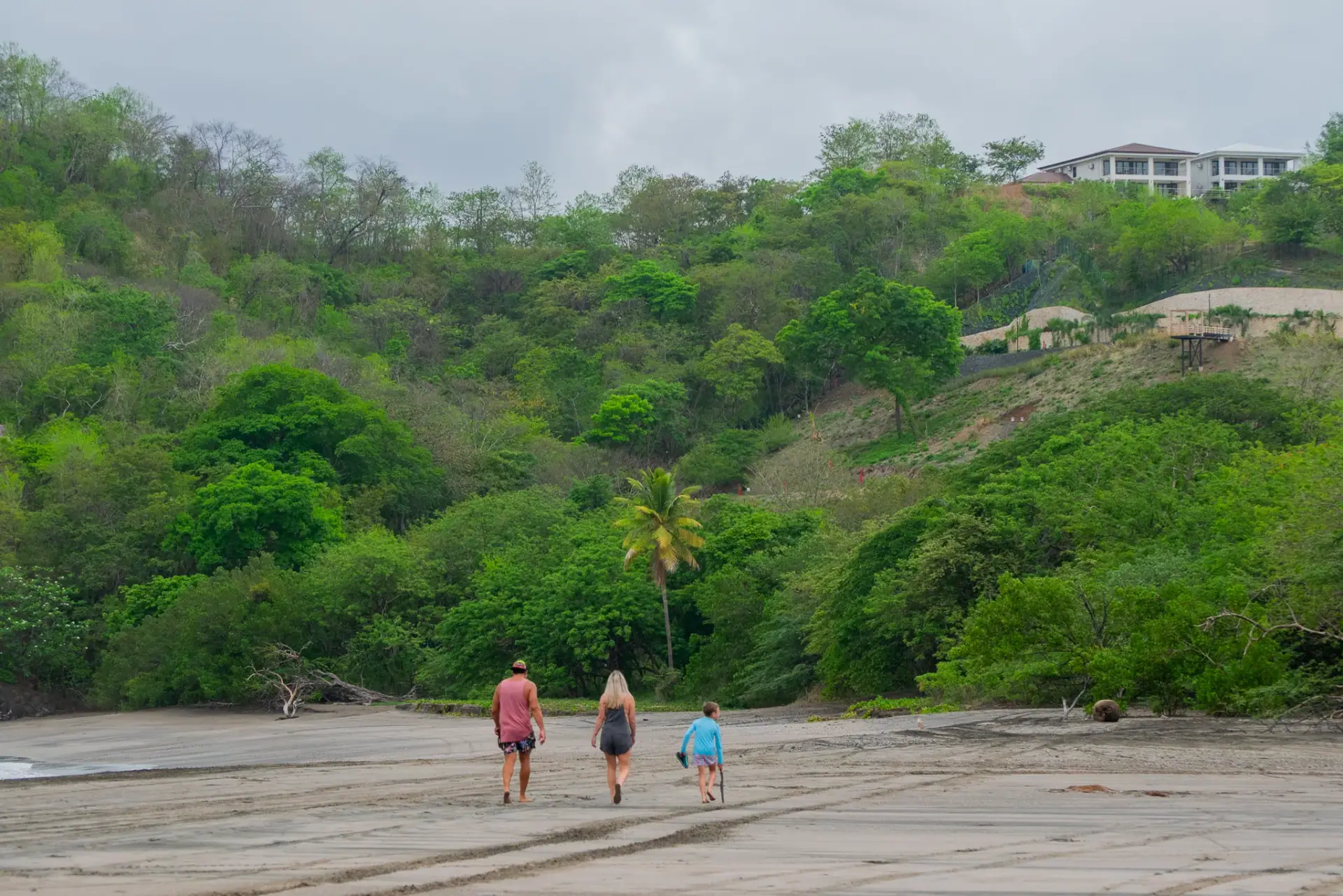
People ask us what living in Brasilito is really like, expecting a brochure answer. Here's the honest one: it's a working Costa Rican beach village that happens to sit next to one of the country's most beautiful beaches — and that combination is exactly why we stayed.
Walk to Playa Conchal
Drive to Huacas (clinics, banks)
Drive to Tamarindo
Drive to LIR airport
A real village, not a resort corridor
Mornings here start with fishermen dragging pangas up the sand and kids biking to the village school. There's a proper plaza where the whole town shows up for fútbol on weekends, two supermarkets, a surf shop, and sodas where the casado costs less than a resort smoothie. The Westin and its golf course are ten minutes away when you want them — and invisible when you don't.
The expat community (and the local one)
Brasilito's foreign community is small and mixed — Canadian retirees, European surf families, remote workers — and it blends into village life instead of gating itself off. Spanish helps; a smile works everywhere. The WhatsApp group solves everything from lost dogs to water-truck schedules.
Practical life: schools, health, groceries
- Public school in the village; bilingual private schools (La Paz, CRIA) 20–35 min away
- EBAIS clinic in Huacas 10 min; private hospitals in Liberia ~1 h
- Auto Mercado and banks at Flamingo/Huacas, 10 minutes by car
- Fresh fish off the boats most mornings — ask for the co-op on the beach
What it costs to live here
A couple living comfortably — rent aside — typically spends $1,800–2,500/month including a car, private insurance and eating out. Housing is the variable: village condos start around $300K, and new projects like Arcadia Brasilito are bringing the first walk-to-everything new construction the village has seen.
Is Brasilito safe to live in?
It's a small village where neighbors know each other — petty theft exists like anywhere on the coast, so normal precautions apply, but families walk to the beach at sunset year-round.
Do I need a car in Brasilito?
For daily village life, no — beach, sodas and shops are walkable. For schools, big groceries and the airport, yes. Most residents keep one car.
Updated June 25, 2026